
Target Background: Essay and Analysis
Explore a dynamic analysis of target background in interventions, examining definitions, social contexts, and frameworks for effective implementation.
October 1, 2026
3,381 words

 Sophia Rivera
The plot of Hidden Figures begins from a familiar space-race story but shifts its center of gravity: instead of treating NASA’s achievements as the work of astronauts and male engineers alone, the film foregrounds Katherine Johnson, Mary Jackson, and Dorothy Vaughan, three Black women mathematicians working at Langley during the 1960s. Scholarship on the film consistently identifies this premise as both biographical and political, since the women’s technical labor unfolds inside a racially segregated and male-dominated workplace (Deutsch, 2018; Pramudya & Prihatika, 2026). Yet a plot analysis also has to account for adaptation. Sztranyan (2023) notes that the film reshapes elements of Shetterly’s nonfiction account through cinematic embellishment, a choice that makes the story accessible but also narrows its historical complexity. Hidden Figures is therefore most defensibly read as an intersectional recovery narrative: it restores these women to the center of NASA’s history while also simplifying structural racism through inspirational plotting, individual-hero emphasis, and contested white-savior dynamics.
The central conflict at Langley is best understood as a system of overlapping controls, not as a series of isolated insults. Studies of Hidden Figures converge in reading the film’s discrimination as intersectional: racism, sexism, and classism operate together to restrict where Black women can work, how their labor is valued, and whether their authority is recognized (Ikhsano & Jakarudi, 2020; Pramudya & Prihatika, 2026). This matters because the plot repeatedly shows that Katherine, Mary, and Dorothy are not excluded for only one reason. They are constrained as Black workers in a segregated institution and as women in a male-dominated scientific culture. Salsabila et al. (2025) similarly describe NASA’s environment as one where gender and race limit “access, recognition, and authority,” especially in aeronautics and space science. The film’s workplace conflict therefore comes from institutional design as much as individual bias.
Spatial segregation makes this system visible by turning ordinary movement into a form of workplace discipline. Katherine’s long trips to the “colored” restroom dramatize how segregation consumes time, marks her body as out of place, and reduces her ability to participate fully in the Space Task Group (Ikhsano & Jakarudi, 2020; Pramudya & Prihatika, 2026). The same logic appears in signs, lunch spaces, and water dispensers, which normalize exclusion through everyday routines rather than open confrontation (Pramudya & Prihatika, 2026). Still, this scene must be handled carefully. Sztranyan (2023) argues that the film’s restroom confrontation is historically altered because Johnson herself reportedly used the white bathroom rather than waiting for a white supervisor to intervene. That qualification does not erase the film’s critique of segregation, but it shows how the plot converts structural control into a more cinematic scene of public recognition.
The same gatekeeping extends from space to professional authority: the women’s expertise is needed, but their presence is treated as negotiable. Katherine’s calculations are essential to the mission, yet the plot bars her from meetings and reports until male supervisors recognize that the work cannot proceed without her (Ikhsano & Jakarudi, 2020; Salsabila et al., 2025). Dorothy faces a related contradiction: she performs supervisory labor and technical leadership, but NASA withholds the title and formal authority attached to that work (Pramudya & Prihatika, 2026; Salsabila et al., 2025). These examples show that discrimination in the film is not simply a failure to notice talent. It is a workplace order that extracts Black women’s intellectual labor while limiting their authorship, mobility, and command. In this sense, the plot makes expertise itself a site of struggle.
After the film establishes intersectional gatekeeping at Langley, Mary Jackson’s engineering plot shows that technical ability alone is not enough when access to qualification is racially controlled. Mary is encouraged toward engineering because of her intelligence, but the required training is held at a whites-only school, forcing her to petition a judge for permission to attend night classes (Pramudya & Prihatika, 2026; Salsabila et al., 2025). This makes education part of the film’s workplace conflict rather than a separate subplot. What looks like a neutral professional requirement becomes a barrier because the institution controlling the credential is segregated. Ikhsano & Jakarudi (2020) similarly read Mary’s legal argument as a demand that education treat women equally, while later analysis emphasizes that the judge’s discretion makes her access conditional rather than guaranteed (Pramudya & Prihatika, 2026). Mary’s victory therefore does not simply reward ambition; it exposes how promotion depends on who is allowed to become “qualified.”
Dorothy Vaughan’s IBM storyline extends this argument from individual access to collective authorship. Although she already performs supervisory labor, Dorothy is denied the title, then responds to automation by teaching herself FORTRAN and preparing her team to operate the new computer (Ikhsano & Jakarudi, 2020; Salsabila et al., 2025). Her leadership matters because it refuses the competitive model that would let one woman survive institutional change while others are displaced. Instead, the plot frames expertise as something shared: Dorothy’s advancement becomes inseparable from the advancement of the Black women she trains. The broader recognition plot works the same way, as Katherine’s calculations, Mary’s engineering path, and Dorothy’s supervisory role show that NASA’s success depended on women whose labor had been historically obscured (Deutsch, 2018; Ikhsano & Jakarudi, 2020). Still, this recognition is not uncomplicated. Sztranyan (2023) warns that Dorothy’s rule-breaking and “mother figure” portrayal can echo stereotype, while Bien-Aimé (2024) shows that public celebration can treat racism and sexism as safely past. The film’s strongest contribution is thus its insistence that competence required recognition, not just performance.
Because earlier scenes show expertise being used while authority is withheld, the protagonists’ resistance matters as more than personal confidence. Their actions turn the plot into a Black feminist counter-narrative in which Katherine, Mary, and Dorothy define themselves inside institutions that have already defined them as secondary. Scholarship reads this resistance as self-definition through negotiation: Katherine challenges the restroom system by linking segregation to workplace efficiency, Mary persuades the court to grant access to engineering education, and Dorothy refuses advancement unless her Black women colleagues are included (Ikhsano & Jakarudi, 2020). These strategies also resist gendered expectations that women should be passive or deferential in scientific workplaces, since the film presents leadership through intelligence, communication, persistence, and collective preparation rather than formal rank alone (Salsabila et al., 2025). In that sense, the film’s inspirational force comes from showing resistance as skilled institutional navigation, not simply endurance.
That counter-narrative, however, is not free from representational tension. Pramudya & Prihatika (2026) argue that Hidden Figures challenges stereotypes of Black women’s intellectual inferiority by repositioning them as central contributors to scientific and technological progress, but Sztranyan (2023) cautions that traces of older stereotypes remain in the characterizations. Katherine’s early deference can echo the submissive Mammy archetype, Mary’s sharp anger can resemble Sapphire or Angry Black Woman tropes, and Dorothy’s supportive leadership can be read through a maternalized stereotype, even when the film also frames these traits as responses to discrimination (Sztranyan, 2023). This complication does not cancel the film’s recovery work, but it limits a simple celebration of representation. The plot disrupts racist assumptions about Black women’s intellect while still relying on familiar images of resilience that can make structural injustice seem solvable through exceptional individual strength.
The film’s final movement depends on a tension already visible in its workplace plot: the story is historically grounded, but its most memorable scenes are often cinematic compressions. Scholars agree that Hidden Figures is based on the real contributions of Katherine Johnson, Mary Jackson, and Dorothy Vaughan at Langley, yet adaptation criticism shows that the film changes chronology and invents key confrontations for dramatic clarity (Deutsch, 2018; Ikhsano & Jakarudi, 2020; Sztranyan, 2023). This is not automatically a weakness. Sztranyan (2023) acknowledges that such embellishments can be partly justified because a film must entertain while communicating the protagonists’ importance. The problem is that these choices do more than shorten history. When the restroom conflict and Mission Control climax are reshaped into scenes of public breakthrough, the plot makes structural exclusion easier to see but also easier to resolve. The result is an accessible inspirational arc that risks replacing slow institutional struggle with symbolic moments of recognition.
That risk is clearest in the Al Harrison scenes, where the film’s critique of segregation becomes entangled with a white-savior structure. In the restroom sequence, Katherine’s exclusion culminates in Harrison destroying the segregation sign; in the Mission Control sequence, the film places Katherine at the dramatic center of John Glenn’s launch even though, historically, she watched from her office because she was not allowed into Mission Control (Sztranyan, 2023). Director Theodore Melfi’s defense, as reported by Sztranyan (2023), is that the film shows both white and Black characters doing what is right. That counterpoint matters because Harrison’s intervention can be read as narrative shorthand for changing institutional attitudes. Still, the agency problem remains. By making a fictional white superior the visible breaker of rules, the film can imply that institutional racism ends when an enlightened authority chooses fairness, rather than when Black women persistently claim space, expertise, and recognition.
The film’s public-memory problem extends beyond the screen because popular recognition often celebrates extraordinary individuals while underexplaining the systems that made their achievements difficult. Bien-Aimé (2024) finds a similar pattern in news coverage after Johnson’s death: journalists often framed her as a trailblazer and acknowledged racism and sexism, but gave limited attention to who maintained those discriminatory structures or how they operated. This complements film criticism rather than simply repeating it. Pramudya and Prihatika (2026) argue that Hidden Figures works as a counter-narrative against stereotypes of Black women’s intellectual inferiority, while also warning that an emphasis on individual success can make structural racism appear solvable through hard work alone. The film therefore matters precisely because it is effective public history. Its inspirational plot restores visibility, but its adaptation liberties can teach audiences to remember exceptional women more readily than the unequal systems they had to overcome.
Hidden Figures is most powerful when its plot is read as an act of recovery rather than simple inspiration. By placing Katherine Johnson, Mary Jackson, and Dorothy Vaughan at the center of NASA’s space-race story, the film challenges a public memory that too often separates scientific achievement from the Black women whose labor made it possible. Its narrative force comes from showing that their intelligence was never the problem; the problem was a workplace and educational order that restricted access, authority, and recognition. At the same time, the film’s emotional clarity depends on simplifications that must be kept in view. Invented confrontations, compressed breakthroughs, and the prominence of a white supervisor make structural racism appear more easily solved than it was. The film’s value, then, is strongest in a double reading: it restores hidden expertise to visibility while also reminding viewers to question how popular history turns complex injustice into a satisfying story.


Cite this article
We encourage the use of reliable sources in all types of writing. You can copy and paste the citation manually or press the “Copy reference” button.
Rivera, S. (2026, October 2). Hidden Figures Plot: Essay and Analysis. Litero Examples. https://litero.ai/examples/hidden-figures-plot-essay-and-analysis/
Science belongs to everyone, not just laboratories. As a research educator and science writer, I create comprehensive essay examples on biological and environmental topics that make science approachable, inspiring, and actionable. With a Ph.D. from Berkeley and over 10 years of science communication experience, I help students and curious minds at Litero understand the natural world through well-crafted, evidence-based writing.
Explore a dynamic analysis of target background in interventions, examining definitions, social contexts, and frameworks for effective implementation.
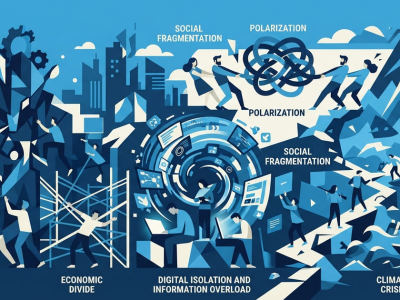
Explore interconnected challenges in modern society—economic insecurity, climate risk, and misinformation—that exacerbate inequality and stress on public trust.
 Academic writing copilot built for students
10M+ sources from academic libraries
Built-in detectors with transparency tools
Context-aware suggestions as you write