Introduction
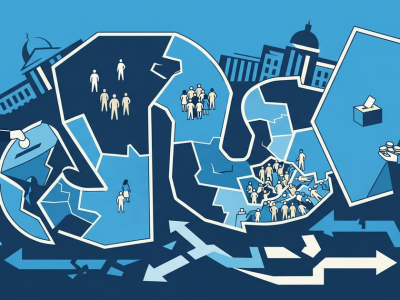
Calling John Locke the “Father of Liberalism” is both persuasive and incomplete. The title captures Locke’s central place in liberal political thought: his account of natural rights, consent, limited government, constitutional restraint, and resistance to tyranny helped shape the language through which modern liberalism explains political authority. Yet the same title can also obscure the tensions within that inheritance. Locke’s liberalism did not simply announce universal freedom in a finished form; it also left unresolved questions about who counted fully as a rights-bearing subject, how property could be accumulated, and how liberty could coexist with colonial domination, slavery, and gender hierarchy. This essay argues that Locke deserves the title “Father of Liberalism” only in a qualified sense. His ideas supplied much of liberal constitutionalism’s foundation, but his legacy remains conflicted because the exclusions built into and around that framework became part of liberalism’s historical development.
Foundational Liberal Architecture
Locke’s claim to liberal “fatherhood” begins with the way he made political authority answerable to the individual rather than to inherited rule. Recent scholarship consistently locates the core of his liberalism in natural law and natural rights: life, liberty, and property are treated as rights that precede political society, and legitimate law exists to protect rather than create them (Подковенко, 2022; Biase, 2024). This is why Locke is often presented as a founder of liberalism or as the author of an early systematic account of political liberalism, especially because his theory connects rights with consent, rule of law, and limits on state power (Yang, 2023; Biase, 2024). Yet that founding status should not be overstated as pure originality. Claeys (2023) qualifies the standard view by placing Locke within a broader natural-law tradition, suggesting that Locke’s rights-based liberalism was innovative in political effect but indebted in moral foundation.
That foundation also depends on Locke’s distinctive picture of human beings before government: free, equal, and rational rather than naturally subordinate. In this account, the state of nature is not lawless license; it is governed by the law of nature, understood through reason, which teaches people not to invade one another’s life, health, liberty, or property (Подковенко, 2022). This matters for Locke’s liberal legacy because equality is not first granted by the state. It is the condition from which political authority must justify itself. At the same time, Locke does not make natural freedom self-sufficient. The natural state lacks a settled common law, an impartial judge, and reliable enforcement, so political society becomes necessary to secure rights more effectively (Подковенко, 2022). Locke’s liberal architecture therefore starts from natural freedom, but it moves toward constitutional order because freedom requires institutions capable of protecting it.
Consent, Rights, and Constitutional Limits
Building on Locke’s natural-rights foundation, his most durable liberal move was to make government a conditional instrument rather than an original source of authority. In this account, people do not abandon freedom simply to be ruled; they consent to political society because the state of nature lacks settled law, impartial judgment, and reliable enforcement. Подковенко (2022) presents Locke’s contract as two related acts: individuals first form society, and that community then authorizes government under law. This distinction matters because it makes government a trust created for a purpose, not an entity that absorbs society itself. The purpose is the preservation of “property” in Locke’s broad sense: life, liberty, and possessions (Подковенко, 2022; Yang, 2023). Biase (2024) complements this reading by stressing that property also secures independence and self-determination. Locke’s consent theory therefore ties legitimate rule to rights-protection, not mere obedience.
That same logic explains why Locke’s liberalism requires constitutional limits on power. If government exists to secure rights, then law cannot be arbitrary, secret, or detached from the common good. Подковенко (2022) identifies Locke’s limits on state power as legal, social, property-based, and institutional: laws must be public and equal, taxation requires consent directly or through representatives, and legislative power cannot be transferred away from those entrusted by the people. Locke’s division of legislative, executive, and federative powers also makes institutional separation a safeguard for individual rights (Подковенко, 2022). This is why recent scholarship links Locke to rule of law, constitutional sovereignty, and the later liberal-democratic tradition (Yang, 2023; Koch & Nag, 2023). Still, the achievement is qualified: his representative order could rest on property-based voting, and Claeys (2023) cautions that natural rights do not automatically translate into simple legal rules. Locke’s constitutionalism is liberal, but not yet fully democratic.
Resistance and Constitutional Legacy
Locke’s theory becomes politically forceful at the point where constitutional limits turn into a right of resistance. Because government is a trust formed after society itself, abuse by rulers does not automatically erase the people’s political community; it instead exposes government as having failed its assigned purpose. Подковенко (2022) identifies Locke’s grounds for popular opposition as legislative abuse that threatens life and property and executive action that bypasses, obstructs, or manipulates the legislature. Resistance is therefore not simple disorder in Locke’s liberalism. It is a constitutional remedy when public power violates the natural norms it was created to protect (Подковенко, 2022). Yet this remedy also reveals a tension in liberal politics: the people must be able to judge tyranny, but that judgment can move politics toward instability. Locke makes rebellion morally intelligible, but he cannot make the moment of resistance politically safe.
That tension helps explain why Locke’s legacy is both constitutional and revolutionary. Recent scholarship links his social contract, natural rights, and rule-of-law principles to later democratic development, including the American and French revolutionary traditions (Yang, 2023; Подковенко, 2022). Locke’s influence also passes through institutional liberalism: separation of powers, representative consent, and limits on sovereignty became core features of later constitutional thought (Подковенко, 2022; Koch & Nag, 2023). Biase (2024) similarly presents the Two Treatises as a systematic defense of political authority grounded in natural rights, liberty, and consent. Still, Locke’s constitutional inheritance is not a story of settled progress. Koch and Nag (2023) place Locke within debates about the enduring role of conflict, war, and revolution in politics. Locke helped liberalism imagine accountable government, but he also made conflict a permanent test of constitutional legitimacy.
Property and Liberal Ambivalence
Locke’s property theory deepens his liberal legacy because it connects freedom to material independence, not only to formal rights. If government exists to preserve natural rights, property becomes especially important because it gives individuals the practical capacity for self-direction. Biase (2024) emphasizes that Locke locates the origin and legitimation of property in labor: people own their persons, and therefore the labor of their bodies can transform common resources into individual property. Claeys (2023) develops this Lockean idea in contemporary terms, treating labor as productive use directed toward survival or flourishing. Yet both readings also show that labor is not an unlimited magic formula for ownership. Locke’s “enough, and as good” condition restricts appropriation, and Claeys adds that justified property requires communication, sufficiency, and necessity provisos (Biase, 2024; Claeys, 2023). Locke therefore made property central to liberal independence, but the right begins as conditional rather than absolute.
The ambivalence appears when Locke’s labor theory is read as a bridge from independence to accumulation. Biase (2024) shows that Macpherson’s influential critique treats Locke as legitimating unrestricted capital accumulation: money avoids spoilage, increased productivity weakens the sufficiency limit, and wage labor lets one person acquire through the labor of another. That critique matters because it turns Locke’s defense of self-ownership into a theory of possessive individualism, where freedom can coexist with dependence among wage workers. Still, the critique is not the only plausible reading. Ryan’s broader interpretation of property includes life and liberty as well as possessions, and Tully’s emphasis on charity preserves some social obligation toward those without means of subsistence (Biase, 2024). Claeys (2023) likewise rejects the view that natural property rights operate as a one-way ratchet toward exclusion; they may justify commons, emergency use, and public limits. Locke’s property legacy is therefore foundational, but also divided.
Exclusions in Liberal Inheritance
The sharpest limit on Locke’s liberal inheritance is that his language of equality could coexist with colonial dispossession and slavery. As the preceding property discussion suggests, the problem is not simply that later empires misused Locke, but that parts of his property theory were already readable in colonial terms. Biase (2024) shows that major interpretations by Tully, Arneil, and Armitage connect Locke’s labor theory to America, where uncultivated land could be treated as “waste” and Native hunting could create ownership in animals without recognizing Native ownership of land. The contradiction becomes even stronger with slavery. Locke’s rights theory rejects absolutism and affirms natural rights to life, liberty, and property (Подковенко, 2022); yet Locke was involved in colonial administration, invested in the Royal African Company, and helped produce a Carolina framework that authorized hereditary African slavery (Biase, 2024). These exclusions make Lockean equality historically and philosophically conditional.
Gender exposes a parallel limit: Locke’s liberalism could challenge patriarchy inside the household while leaving women outside full civic equality. Yang (2023) argues that Locke’s use of consent in marriage weakened older patriarchal assumptions by giving women some agency in conjugal relations, divorce, household property, and childrearing. That matters because it shows Locke’s ideas were not simply hostile to gender equality. His natural-rights language could be extended toward women’s autonomy and equal moral status (Yang, 2023). Still, Yang’s reading is ultimately qualified rather than celebratory: Locke did not articulate women’s rights as fully as men’s, accepted gendered assumptions about women’s rational capacity, and left women largely confined to private roles rather than public citizenship (Yang, 2023). The result is a liberalism that contains resources for later equality claims, but does not itself apply equality universally.
Conclusion
Locke’s reputation as the “Father of Liberalism” is justified, but only when the title is treated as a starting point for judgment rather than as uncomplicated praise. His political theory helped give liberalism its enduring grammar: rights before government, consent as the basis of legitimacy, constitutional limits on rulers, property as a condition of independence, and resistance as a remedy against tyranny. Those ideas remain central to liberal constitutional thought because they make power answerable to persons rather than persons answerable to power. Yet Locke’s legacy also shows that liberalism did not emerge as a fully universal doctrine. Its founding language could be stretched toward equality, but it could also coexist with property inequality, colonial dispossession, slavery, and restricted citizenship for women. Locke therefore deserves the title in a qualified sense: he helped found liberalism’s most powerful ideals, while also revealing the exclusions liberalism would have to confront to become genuinely universal.
-
{"bio": "Science belongs to everyone, not just laboratories. As a research educator and science writer, I create comprehensive essay examples on biological and environmental topics that make science approachable, inspiring, and actionable. With a Ph.D. from Berkeley and over 10 years of science communication experience, I help students and curious minds at Litero understand the natural world through well-crafted, evidence-based writing.", "expertise": ["Content Writing", "Research Synthesis", "Peer Review", "Scientific Journalism"], "connections": [{"platform": "linkedin", "url": "www.linkedin.com/in/dr-sofia-m-rivera-067aa5432"}, {"platform": "orcid", "url": "https://orcid.org/0009-0001-0458-4053"}]}
-
{"bio": "Literature is the mirror of our society, and I believe every Filipino student deserves to see themselves in their academic work. As a research writer and humanities educator at Ateneo de Davao, I develop essay examples grounded in Philippine literature, history, and cultural studies that are both academically rigorous and deeply relevant to Filipino learners. My work bridges traditional scholarly writing and the rich oral and written traditions of the Philippines.", "expertise": ["Content Writing", "Literature", "Humanities Research", "Creative Non-Fiction"], "connections": [{"platform": "linkedin", "url": "www.linkedin.com/in/angelica-f-buenaventura-m-a-92a8bb42b"}, {"platform": "orcid", "url": "https://orcid.org/0009-0003-0117-1055"}]}