Introduction
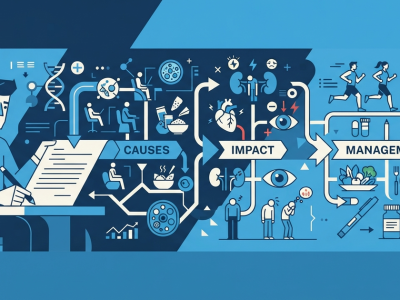
Drug addiction is a major public-health and social problem because it harms health, families, communities, and public systems at the same time. Yet public debate often treats addiction as if it were mainly a problem of weak character or bad choices. That moralized view is too narrow. It obscures how substance use disorders develop through interactions among brain changes, mental health, trauma, social conditions, drug supply, and access to care. It also encourages responses that punish people while doing little to reduce overdose risk or support recovery. This essay argues that drug addiction is best understood as a chronic, treatable brain-and-environment disorder rather than a moral failure. Because the current crisis is shaped by fentanyl, polysubstance use, stigma, social vulnerability, and criminal-justice exposure, effective policy must combine medication treatment, harm reduction, surveillance-guided prevention, and trauma-informed support instead of relying on abstinence-only or punitive approaches.
Medical and Biopsychosocial Framing
A medical framing is necessary because addiction is not simply repeated bad behavior; it is a chronic, treatable condition in which substance use becomes compulsive and continues despite harm. ASAM defines addiction as involving interactions among brain circuits, genetics, environment, and life experience, and it frames opioid use disorder through DSM-5 diagnostic criteria rather than older moralized labels (Anonymous, 2020). That shift matters because diagnostic language shapes what kinds of responses seem legitimate. If addiction is described as “abuse,” the language itself can imply blame; ASAM therefore recommends avoiding the term in clinical and research contexts because of its pejorative connotations (Anonymous, 2020). Hayes et al. (2020) add that clinical definitions of addictive disorders have changed as research has clarified mechanisms of drug use, dependence, tolerance, withdrawal, and relapse. The strongest definition, then, is medical without being reductive: addiction is treatable, but it is not merely a matter of willpower.
Neurobiology strengthens this framing by showing that addiction involves systems related to reward, control, stress, emotion, and learning rather than a single isolated defect. Functional neuroimaging research has helped identify circuits underlying addiction and has been used to examine processes such as dependence, withdrawal, and relapse (Hayes et al., 2020). This evidence supports the view that opioid use disorder is a brain disorder, not a character flaw, while still leaving room for psychological and social influences (Anonymous, 2020; Hayes et al., 2020). However, the brain-based explanation should not be overstated. Hayes et al. (2020) note that evidence linking neuroimaging findings directly to the benefits of psychosocial and pharmacological interventions remains limited and often inconclusive. Neurobiology explains why addiction can be persistent and relapsing, but it does not by itself tell clinicians which treatment will work for each person.
The evidence also shows why a narrow biomedical model is incomplete: addiction is shaped by social conditions that affect both risk and access to care. Research on overdose and polysubstance use emphasizes that root causes are complex and socially determined, requiring attention to both individual and community characteristics (Figgatt et al., 2021). Gendered evidence makes this point especially clear. Page et al. (2024) argue that women’s drug and alcohol dependency is often tied to trauma and poor mental health, and that stigma can prevent timely identification of needs and access to appropriate services. Punitive systems can deepen the problem when fear of child removal, professional judgment, or state-driven stigma deters treatment-seeking (Page et al., 2024). Even medication-centered care may fail when substance use is connected to ongoing domestic abuse or poverty. A useful medical model must therefore be biopsychosocial: it treats addiction clinically while also addressing stigma, trauma, and social vulnerability.
Fentanyl, Polysubstance Use, and Surveillance
The overdose crisis should not be read as only an extension of the earlier prescription-opioid and heroin waves. Recent evidence points to a changing drug supply in which synthetic opioids, especially fentanyl, have become central. National surveillance shows that synthetic-opioid mortality was relatively stable from 2002 to 2013, then increased through 2022 before declining in 2023; nonfatal emergency-department data similarly show fentanyl overdoses rising even as heroin overdoses fell (Liu et al., 2025). The shift is visible in the crossover from heroin to fentanyl: in October 2020, heroin overdoses far outnumbered fentanyl overdoses, but by February 2023 fentanyl overdoses had surpassed heroin overdoses and remained higher through April 2025 (Liu et al., 2025). Although recent declines complicate a simple “always increasing” narrative, they do not erase the structural change. Prevention now has to respond to a synthetic-opioid market, not only to prescribing patterns or heroin use.
At the same time, focusing only on opioids misses a major part of contemporary overdose risk. Polysubstance use has become a defining feature of fatal overdose patterns, especially when opioids are combined with stimulants, benzodiazepines, or alcohol. In North Carolina, polysubstance overdoses made up more than half of fatal overdoses from 2009 to 2018, and among opioid-involved deaths the polysubstance share rose from 28.0% to 69.1% (Figgatt et al., 2021). The most important meaning of those figures is that overdose risk increasingly comes from combinations rather than from one substance class in isolation. This also aligns with national surveillance concerns that recent overdose mortality has been driven not only by synthetic opioids but also by stimulant-involved and polysubstance overdoses (Quader et al., 2024). Because the drug environment is mixed and unpredictable, public-health messaging and naloxone distribution need to address combinations of substances rather than treating “opioid overdose” as a single, uniform event.
Surveillance is therefore not a technical side issue; it shapes whether prevention reaches the right people and places. Nonfatal overdoses are a major warning signal because people who survive one overdose face elevated risk of later fatal overdose, yet these events are often harder to count quickly than deaths (Quader et al., 2024). Timely systems matter: DOSE data can provide state-level nonfatal overdose estimates faster than older discharge-data sources, while syndromic surveillance has captured large-scale emergency-department trends across thousands of facilities (Quader et al., 2024; Liu et al., 2025). Still, the evidence also cautions against treating these systems as perfect measures of exact burden. Fentanyl may be underdetected because testing, coding, and clinical documentation have changed over time, and syndromic data are best for broad trends rather than precise counts (Liu et al., 2025). The practical conclusion is targeted humility: prevention should be guided by real-time patterns, but adjusted for surveillance limits and local differences.
Medication Treatment and Harm Reduction
Because addiction has already been framed as chronic and treatable, opioid care should begin with medications rather than with the expectation that willpower or untreated abstinence will be enough. Clinical guidance treats FDA-approved medications for opioid use disorder as legitimate treatment that helps patients enter and remain in care, and it explicitly defines abstinence as compatible with approved medication use (Anonymous, 2020). That point directly challenges abstinence-only thinking: medication is not a substitute addiction but an evidence-based way to stabilize a relapsing disorder. The strongest applied evidence comes from correctional care. Green et al. (2018) found that a statewide prison-and-jail medication program using methadone, buprenorphine, or naltrexone was followed by a large reduction in postrelease overdose deaths; practically, the program needed to treat about 11 people to prevent one overdose death. Although the study had limits, including small sample size and incomplete postrelease treatment data, it shows why medication access should be treated as core care, not an optional add-on.
Medication alone, however, is not enough in a fentanyl-era overdose environment, so treatment systems also need harm reduction and rapid linkage to care. Emergency departments are a crucial contact point because people who survive a nonfatal overdose face elevated risk of later fatal overdose, even though many fatal cases have no documented prior overdose history (Quader et al., 2024). Liu et al. (2025) therefore support continued overdose-reversal medication distribution and linkage to evidence-based opioid treatment in emergency departments, with prevention tailored to the people and regions most affected. At the same time, naloxone should not be mistaken for a complete treatment strategy. In the Rhode Island correctional study, naloxone distribution at release actually fell while medication treatment expanded, and the authors argued that naloxone provision did not explain the mortality reduction (Green et al., 2018). Recovery support must also address social roots of drug dependence, because purely medical responses can miss trauma, abuse, and stigma (Page et al., 2024). Effective care combines overdose survival with a pathway into sustained treatment.
Vulnerability, Trauma, and Justice Exposure
The same biopsychosocial logic applies most sharply in criminal-justice settings, where release from incarceration can turn untreated opioid use disorder into an immediate overdose risk. As illicit opioids became more central to the epidemic, more people with opioid use disorder entered the justice system, yet many correctional facilities still did not initiate or continue medication treatment (Green et al., 2018). Green et al. (2018) found that Rhode Island’s statewide correctional medication program was followed by a meaningful drop in postrelease overdose deaths: recently incarcerated people accounted for 14.5% of overdose decedents in 2016 but 5.7% in 2017, a 60.5% reduction. That finding should not be overstated as definitive proof, because the study lacked individual-level medication-enrollment data and had a small sample. Still, the pattern supports treating jails and prisons as health-intervention sites, not just punishment sites.
Addiction policy also has to account for trauma, psychiatric comorbidity, homelessness, violence, and parenting-related harms because these pressures shape both drug use and treatment access. Clinical guidance notes that opioid use disorder commonly overlaps with other substance use and psychiatric or medical disorders (Anonymous, 2020). Page et al. (2024) extend that point by showing how women’s addiction is often tied to trauma, poor mental health, domestic abuse, poverty, and stigma. A purely medical response can miss those roots when medication is offered without safety, housing, or trauma-informed care. Punitive systems can make the problem worse when women avoid help because they fear judgment or child removal (Page et al., 2024). The implication is not that medical treatment is unnecessary, but that recovery support must be tailored to the social conditions that keep people at risk.
Conclusion
Drug addiction should be addressed as a treatable health condition embedded in social reality, not as a personal defect deserving punishment. The evidence reviewed across this essay points in the same direction: addiction involves brain, behavior, trauma, drug-market risk, and unequal access to care, so no single abstinence-only or punitive response can meet the scale of the problem. Fentanyl and polysubstance use make overdose prevention urgent, while incarceration, stigma, poverty, and trauma can intensify risk instead of resolving it. A stronger response therefore combines medication treatment, naloxone and harm reduction, timely overdose surveillance, and supportive services that address mental health, safety, housing, and family stability. This approach does not excuse harmful behavior; it recognizes that recovery is more likely when people can survive, enter care, and remain connected to treatment. The central insight is clear: public-health strategies save more lives than moral judgment.
-
{"bio": "I am a passionate research educator with over 12 years of experience crafting academic essays and educational content. My mission is to democratize high-quality academic writing by producing clear, well-researched essay examples across humanities topics. I specialize in rhetoric, argumentative writing, and literary analysis to help students and lifelong learners develop their critical thinking skills.", "expertise": ["Academic Writing", "Essay Development", "Rhetoric", "Literary Analysis", "Research Methodology", "Educational Content Creation", "Peer Review", "MLA/APA/Chicago Formatting", "Curriculum Development", "Critical Thinking"], "connections": [{"platform": "orcid", "url": "https://orcid.org/0009-0003-1008-0593"}]}
-
{"bio": "I bridge the worlds of economics, data science, and academic writing. At the University of Washington, I develop research essays and writing frameworks that help students tackle quantitative subjects with clarity and rigor. My essays on economic policy, behavioral economics, and data-driven analysis are used in university courses across the country. I'm particularly passionate about making economics writing accessible to first-generation college students and underrepresented groups in STEM.", "expertise": ["Economic Research", "Data Analysis", "Academic Essay Writing", "Econometrics", "Data Visualization", "R and Python", "APA/Chicago Formatting", "Policy Memo Writing", "Research Communication", "Educational Content Design"], "connections": [{"platform": "orcid", "url": "https://orcid.org/0009-0009-1655-9136"}]}