Introduction
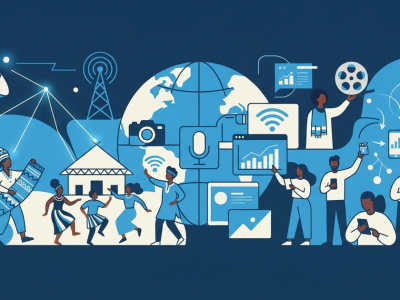
Cultural difference is often treated as a problem of distance, as if people from “different cultures” simply carry separate values, habits, or identities into contact with one another. That view is too static. In everyday life, cultural difference is made and remade through interaction: how people speak, listen, interpret unfamiliar behavior, negotiate identity, and respond to unequal power. This makes culture a contemporary social question rather than a simple label for group membership. Difference can widen misunderstanding when language barriers, stereotypes, ethnocentrism, discrimination, or pressure to assimilate make unfamiliarity seem threatening. Yet the same difference can also support communication, belonging, social connection, and adaptation when people develop practical intercultural competence, accept plural identities, and build relationships across boundaries. This essay argues that cultural difference should be understood as a relational process: neither automatically enriching nor inherently divisive, but shaped by the social conditions under which people meet.
Dynamic Cultural Difference
Understanding “different culture” begins with rejecting the idea that culture is a single fixed trait carried unchanged by a group. Culture is better understood as a set of resources, relationships, and meanings that people activate differently across situations. Juang & Syed (2019) describe polyculturalism as an approach in which people in pluralistic societies develop identities, values, and relationships from many cultural sources rather than from one bounded system. Chen et al. (2025) similarly argue that culture emerges through real-time interaction, where norms are negotiated, challenged, and reinforced rather than merely inherited. This does not mean culture is endlessly flexible or weightless; it means that cultural difference is produced through contact, including migration, globalization, media, and remote forms of acculturation (Juang & Syed, 2019; Chen et al., 2025). A dynamic model therefore explains difference more accurately than a static “us versus them” view.
This dynamic view also requires multidimensional models of adaptation, because cultural contact does not affect identity, behavior, language, and social belonging in one uniform way. Acculturation research increasingly separates practices, values, and identity while also attending to context, time, institutional setting, and social position (Juang & Syed, 2019). That specificity matters because simpler models often reduce adaptation to individual choice, even though immigrant adjustment is shaped by family, schools, peers, policy, and broader global forces. The scale of migration makes this more than a personal issue: international migrants rose from about 281 million in 2020 to an estimated 304 million by mid-2024, making cultural diversity a structural feature of contemporary societies rather than an exception (Chen et al., 2025). Cultural difference therefore calls for models that can track movement, layered identities, and changing relationships, not categories that freeze people into one cultural location.
Communication Across Cultural Boundaries
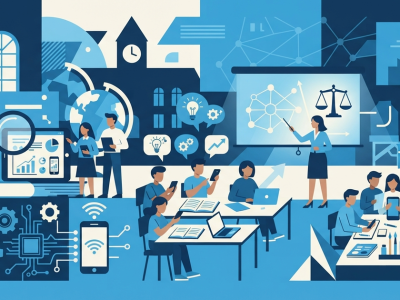
If culture is dynamic rather than fixed, communication is where that dynamism becomes most visible. Cultural difference is not only a matter of vocabulary or accent; it also appears in expectations about politeness, directness, formality, hierarchy, and what counts as appropriate speech. Yadav (2024) defines pragmatic competence as the ability to use language in context while accounting for social, cultural, and interpersonal meaning. That concept matters because cross-cultural communication involves direct contact between people whose assumptions about language use may not match (Tarasenko & Куликова, 2018). In this sense, successful intercultural communication requires more than grammatical accuracy. Speakers must read context, adjust strategies, and understand that the same words or gestures may carry different social meanings across settings (Yadav, 2024). Cultural difference therefore becomes manageable when people treat communication as interpretation, not simple message transfer.
Misunderstanding, however, shows why communication across cultural boundaries can also become stressful. Studies of intercultural communication identify repeated sources of breakdown: assuming similarity, misreading nonverbal cues, relying on stereotypes, evaluating unfamiliar behavior too quickly, and experiencing high anxiety (Tarasenko & Куликова, 2018; Taracenko & Kulykova, 2018). Yadav (2024) describes this as pragmatic failure, where communication breaks down because language use does not fit the cultural norms of the exchange. Chen (2025) adds that this problem is not merely external misunderstanding but can limit the speaker’s own self-expression. In Chen’s study of first-generation Chinese immigrants, more than half of participants said language barriers concealed their emotions and prevented deeper expression in English. That evidence complicates the optimistic view that contact alone improves understanding. Without competence and trust, cultural difference can make people appear less confident, less expressive, or less competent than they are.
The strongest response is not assimilation but better intercultural preparation and more supportive interaction. Pragmatic training, cultural learning, and intercultural tolerance are presented as ways to reduce communication breakdowns because they help speakers anticipate difference rather than react defensively to it (Yadav, 2024; Tarasenko & Куликова, 2018). Yet training by itself is incomplete. Chen et al. (2025) emphasize that acculturation unfolds through social exchange between immigrants and non-immigrant residents, so communication competence develops within relationships, workplaces, and local networks. Chen (2025) shows this relational process in language switching: as English competence improved, many participants moved from inhibition toward more authentic expression, and 83.33% reported becoming more direct and assertive when communicating in English. Cultural difference, then, is not erased by communication skills. It becomes less threatening when people gain the practical and relational conditions needed to express themselves across cultural boundaries.
Relational Adaptation and Identity
Because adaptation cannot be reduced to a single personal choice, it is best understood through the everyday relationships in which cultural meanings are tested and revised. Chen et al. (2025) argue that acculturation is socially embedded and interaction-driven, formed through ordinary exchanges between immigrants and non-immigrant residents rather than only through private psychological adjustment. This view complements Juang & Syed (2019), who place immigrant adaptation at multiple levels, including the individual, interactional, and societal levels. Supportive relationships make those levels concrete. Attachment bonds, peer ties, and connections to new places can provide safety, confidence, and coping resources, while diverse social networks are associated with stronger psychological well-being (Juang & Syed, 2019; Chen et al., 2025). Cultural difference becomes easier to navigate when people are not left to adapt alone but are included in relationships that make learning, trust, and belonging possible.
Bicultural integration is often beneficial, but the evidence does not support a simple claim that “more adaptation” is always better in every domain. Integration, or maintaining a heritage culture while engaging the host culture, is generally linked to better psychological adaptation, while marginalization is tied to poorer mental health (Chen et al., 2025). In a study of adolescent psychosocial profiles, Sánchez‐Castelló et al. (2020) found that the bicultural profile was the most adaptive, although positive results appeared across all three profiles. That qualification matters: Juang & Syed (2019) show that heritage maintenance may matter more in private life, while majority-culture adaptation may be more adaptive in public settings such as school or work. Language also shapes identity unevenly. In Chen (2025), 66.67% of participants reported feeling more authentic as English proficiency improved. Biculturalism is therefore strongest when it permits flexible identity, not when it demands uniform assimilation.
Adaptation also unfolds over time, so cultural identity should be seen as developmental rather than fixed at arrival. Juang & Syed (2019) distinguish developmental tasks, such as forming friendships and exploring identity, from acculturative tasks, such as navigating competing cultural expectations across family, school, and society. Chen et al. (2025) similarly describe acculturation as gradual and shaped by age at migration, length of residence, and the host environment. Yet development is not automatically positive. Acculturative stress links cultural barriers to anxiety, depression, sleep problems, and other mental health risks, especially when language barriers and social isolation intensify alienation (Chen et al., 2025; Chen, 2025). Still, the same evidence points to resilience and support as buffers: close attachments, peer support, and safe language-practice spaces can turn cultural difficulty into growth. Adaptation is therefore relational and uneven, but not predetermined.
Power and Cultural Threat
The same everyday interaction that can support adaptation can also turn cultural difference into conflict when it is filtered through threat and hierarchy. Chen et al. (2025) show that xenophobia is not simply discomfort with unfamiliar customs; it is fear or hostility toward people marked as foreign, often intensified by worries about jobs, cultural erosion, and social cohesion. Their account links this hostility to social dominance, system justification, and perceived realistic or symbolic threat, which helps explain why cultural maintenance by immigrants can be read by non-immigrant residents as refusal to belong (Chen et al., 2025). Communication research complements this point: stereotypes, premature evaluation, and anxiety repeatedly appear as sources of intercultural misunderstanding (Tarasenko & Куликова, 2018; Taracenko & Kulykova, 2018). Cultural difference becomes dangerous, then, not because groups are naturally incompatible, but because power can make unfamiliarity seem like a threat.
This also means that adaptation cannot be judged only by how well minority individuals adjust. Juang & Syed (2019) argue that an intersectional approach shifts attention from “fixing” marginalized people toward examining institutions that create barriers through racism, classism, sexism, and other overlapping systems. Chen et al. (2025) make a similar point about reception: power distance, class, discrimination, and credential recognition can either support or block immigrant adaptation. When prior qualifications are not recognized, immigrants may experience downward mobility, weaker social trust, and fewer chances to build relationships with local residents (Chen et al., 2025). This qualifies the more optimistic evidence on biculturalism and integration. Maintaining heritage culture while participating in the host society may be adaptive, but only when institutions and dominant groups allow that participation to be meaningful rather than conditional on assimilation. Cultural difference becomes conflict when inclusion is offered only after minority cultures are treated as problems to manage.
Conclusion
Cultural difference is not a problem to solve by erasing it, nor a benefit that appears automatically when groups meet. The evidence in this essay points to a more conditional conclusion: difference becomes productive when people have the skills, relationships, and institutional support needed to interpret one another without fear. Pragmatic competence helps people communicate across unequal expectations; plural identity allows people to belong without giving up heritage; and supportive networks make adaptation a shared process rather than an individual burden. Yet those same differences can become harmful when language barriers are treated as personal failure, when stereotypes replace listening, or when institutions demand assimilation before granting inclusion. The central issue, then, is not cultural difference itself but the social response to it. Societies that treat difference as a resource create conditions for communication and belonging; societies that treat it as a threat turn diversity into exclusion.
-
{"bio": "Literature is the mirror of our society, and I believe every Filipino student deserves to see themselves in their academic work. As a research writer and humanities educator at Ateneo de Davao, I develop essay examples grounded in Philippine literature, history, and cultural studies that are both academically rigorous and deeply relevant to Filipino learners. My work bridges traditional scholarly writing and the rich oral and written traditions of the Philippines.", "expertise": ["Content Writing", "Literature", "Humanities Research", "Creative Non-Fiction"], "connections": [{"platform": "linkedin", "url": "www.linkedin.com/in/angelica-f-buenaventura-m-a-92a8bb42b"}, {"platform": "orcid", "url": "https://orcid.org/0009-0003-0117-1055"}]}
-
{"bio": "I bridge the worlds of economics, data science, and academic writing. At the University of Washington, I develop research essays and writing frameworks that help students tackle quantitative subjects with clarity and rigor. My essays on economic policy, behavioral economics, and data-driven analysis are used in university courses across the country. I'm particularly passionate about making economics writing accessible to first-generation college students and underrepresented groups in STEM.", "expertise": ["Economic Research", "Data Analysis", "Academic Essay Writing", "Econometrics", "Data Visualization", "R and Python", "APA/Chicago Formatting", "Policy Memo Writing", "Research Communication", "Educational Content Design"], "connections": [{"platform": "orcid", "url": "https://orcid.org/0009-0009-1655-9136"}]}