Introduction
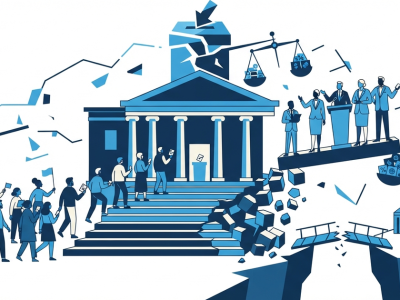
Democracy has enduring appeal because it promises that public power will remain answerable to the people it governs. By linking authority to elections, public debate, legal rights, and participation, democratic governance offers a stronger moral and institutional basis for rule than systems that exclude citizens from political choice. Yet democracy should not be treated as automatically effective simply because it holds elections or uses representative institutions. Its strengths depend on whether citizens can participate freely, whether leaders can be removed or constrained, whether information is reliable, and whether institutions can withstand polarization and anti-democratic pressure. This essay argues that democratic governance remains preferable because it institutionalizes accountability, civil liberties, policy voice, and human-development gains, but its advantages are conditional rather than automatic: elections alone do not reliably ensure responsiveness, economic effects vary by context, and polarization, populism, and institutional fragility can turn democratic mechanisms into sources of inefficiency and backsliding unless accountability institutions, civic support, and information systems are actively sustained.
Accountability and Responsiveness
Democracy’s strongest institutional advantage is that it gives citizens recognized channels to monitor, pressure, and replace leaders. Democratic accountability is commonly understood as citizen control over government through participation, checks and balances, judicial independence, and protection of individual freedom (Mohammadi et al., 2023). This is why democratic systems are often expected to raise welfare: they allow citizens to express needs, monitor rulers, and push governments toward policies that serve the broader public (Soretz et al., 2025). Yet this promise depends on more than periodic elections. Public demands must move through parties, legislatures, courts, and bureaucracies before they become services. Mukherjee (2025) emphasizes that in parliamentary government, ruling parties advance their programs through the state bureaucracy, which means accountability depends on administrative implementation as well as electoral sanction. Democracy therefore creates the opportunity for responsiveness, but institutions determine whether that opportunity becomes policy.
The limits of electoral accountability become clear when even highly visible public goods fail to generate political rewards. Goyal (2023) tests this problem through India’s large rural roads program, a strong case because roads are visible, valued by voters, and easier to evaluate than complex services such as health or education. The scale was also politically meaningful: the program built more than 180,000 all-weather roads over 550,000 kilometers at a cost exceeding US$41 billion (Goyal, 2023). If elections reliably rewarded service delivery, such a program should have helped incumbents. Instead, Goyal finds that road provision did not increase ruling-party vote share across electoral levels and time periods, and instrumental-variable estimates reinforced the null result (Goyal, 2023). This evidence does not disprove democracy’s accountability ideal, but it shows that voters do not automatically translate service improvements into electoral punishment or reward.
Information and transparency improve the conditions for accountability, but they are not sufficient by themselves. Goyal’s findings are especially important because the weak electoral response persisted even where road construction was salient, responsibility was relatively clear, and media or literacy conditions should have made information easier to use (Goyal, 2023). That result qualifies the common reform assumption that more information alone will make voters discipline leaders. At the same time, information systems still matter because democratic bargaining requires shared facts. Williams (2025) argues that digital media can weaken common factual baselines and make compromise appear morally suspect, especially when identity-protective cognition is intensified. The lesson is not that accountability is impossible, but that it must be actively organized through credible information, transparent administration, and institutions capable of converting citizen preferences into public action.
Rights and Development
The accountability advantages discussed above matter because democracy also protects the conditions under which citizens can live and participate freely. Democratic governance is valued not only for elections but for basic freedoms, equality, rights, and opportunities, and the claim that democratization supports human-rights protection remains a central defense of democracy (Mohammadi et al., 2023; Soretz et al., 2025). Still, liberty is not a single outcome with one uniform effect. Rubin & Morgan (2020) separate civil liberties into physical integrity rights, political liberties, and private liberties in a study of 177 states from 1970 to 2018. Their findings complicate a simple pro-liberty story: protections against state violence are expected to reduce terrorism by lowering grievances and increasing trust, while political liberties can also protect the organizational space of extremist actors (Rubin & Morgan, 2020). Democracy’s rights advantage is therefore real, but its security effects depend on which rights are being considered.
The economic case for democracy is more mixed than the rights case. Across the recent literature, there is no settled consensus that democracy automatically raises economic growth, because outcomes depend on historical, social, economic, and institutional conditions (Mohammadi et al., 2023). Mohammadi et al. (2023) show this variation in a study of 32 OECD countries and 27 developing countries from 1990 to 2020. In OECD countries, democracy had a negative and significant effect on real per capita GDP growth, supporting the conflict hypothesis in that group; in the developing-country sample, the authors found no causal relationship in either direction, supporting a skeptical interpretation (Mohammadi et al., 2023). This does not make authoritarianism preferable, since the same authors explicitly defend democracy for freedom, equality, rights, and opportunity. It does mean that democracy should not be defended by promising reliable short-run growth.
Democracy’s developmental advantage is clearer when the measure is human development rather than GDP growth alone, though even this evidence remains conditional. Soretz et al. (2025) examine 74 countries from 1995 to 2021 using a spatial econometric model that treats countries as interconnected rather than isolated. They find that democracy improves human development directly through accountability and governance and indirectly through growth and income generation, with regional spillovers also shaping outcomes (Soretz et al., 2025). In their model, a one-percentage-point increase in annual economic growth is associated with about a 0.53 increase in HDI, which they interpret as meaningful improvement in health, education, and living standards (Soretz et al., 2025). Yet the authors also note authoritarian human-development successes in parts of East Asia, persistent poverty in many developing democracies, and unresolved endogeneity concerns. Democracy can foster development, but it works through institutions and context, not magic.
Polarization and Backsliding
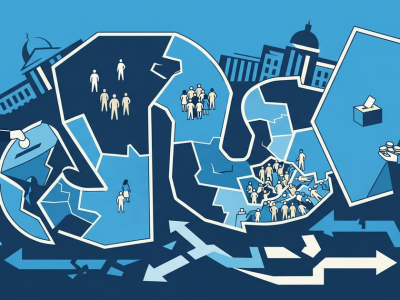
The same accountability limits discussed earlier become more serious when democratic competition turns into polarized identity conflict. In that setting, the problem is not simply that citizens disagree; it is that parties, institutions, and media systems can convert disagreement into durable antagonism. Williams (2025) argues that electoral sorting, geographically concentrated representation, asymmetric procedural incentives, and platform-mediated media consumption now reinforce one another, making compromise appear less like bargaining and more like betrayal. Institutions meant to slow sudden majorities can then reward obstruction when parties are ideologically sorted and electorally insulated (Williams, 2025). Economic pressures can intensify the same pattern because electoral cycles may encourage short-term spending, fiscal populism, rent-seeking, and policy instability (Soretz et al., 2025). Democracy’s cost here is not deliberation itself, but the way competitive incentives can make delay, reversal, and symbolic conflict more politically rewarding than durable policy.
Populism is one of the clearest pathways through which democratic competition can become democratic backsliding. Rather than abolishing elections immediately, populist governments can use electoral mandates to weaken the institutions that make elections meaningfully competitive. Bugarič (2019) shows this pattern in Hungary and Poland, where populist governments combined attacks on rule-of-law institutions, civil rights, media independence, and electoral rules, dismantling key democratic safeguards in a short period. Mukherjee (2025) complements this account from India by examining how populist governments affect public administration and accountability legislation, especially through the bureaucracy that implements majority-party programs. These cases differ by region and institutional history, but they point to the same danger: democratic legitimacy can be invoked to centralize authority and weaken accountability from within. Populism therefore exposes a core vulnerability of democracy: majority rule can be turned against the conditions that keep rule democratic.
Constitutional safeguards remain essential, but the evidence suggests that they are less self-enforcing than democratic theory sometimes assumes. Mohammadi et al. (2023) treat democratic accountability as including participation, checks and balances, judicial independence, and protection of individual freedom, which shows why constitutional limits are central to democracy rather than external restraints on it. Yet Bugarič (2019) argues that law and constitutional checks are a weaker bulwark against backsliding than legal scholarship often presumes, especially when constitutional democracy no longer has broad public support. Williams makes a similar point institutionally: separation of powers remains normatively valuable, but it becomes brittle when Congress cannot form procedural consensus, presidents govern through reversible administrative action, and courts settle conflicts once handled politically (Williams, 2025). The lesson is not fatalism. Constitutional democracy survives when legal safeguards are reinforced by democratic parties, civic support, and information systems that make restraint politically viable.
The evidence points less to abandoning democracy than to repairing the institutions that make democratic choice meaningful. Earlier sections showed that responsiveness depends on implementation capacity and that constitutional checks can become brittle under polarization; this makes reform a practical requirement, not an optional ideal. Williams (2025) argues that democratic repair requires lowering zero-sum incentives, strengthening voting access and representation, protecting judicial legitimacy, increasing transparency in platform governance, and rebuilding civic institutions. This aligns with Soretz et al. (2025), who recommend moving beyond generic democracy promotion toward inclusive institutions, accountability, transparency, and regional cooperation. The counterpoint is real: Bugarič (2019) warns that law and checks alone are weaker safeguards than often assumed, and Mohammadi et al. (2023) show that democracy alone does not reliably produce growth in developing countries. But those limits strengthen the case for reform, because democracy’s benefits depend on supportive institutions rather than elections by themselves.
Conclusion
Democracy’s advantages outweigh its disadvantages, but only when democratic procedures are supported by institutions and norms strong enough to make participation meaningful. Elections, rights, and public debate give citizens tools that authoritarian systems do not provide, yet those tools do not automatically produce accountability, growth, or stability. The evidence considered in this essay shows that democratic governance works best when voters have reliable information, administrators can translate public demands into policy, courts and legislatures can restrain power, and civic culture supports compromise rather than permanent antagonism. Its weaknesses—polarization, populism, short-termism, and backsliding—are therefore not reasons to abandon democracy, but warnings against treating it as self-sustaining. A democracy that protects rights while strengthening accountability institutions remains the most defensible form of governance. Its promise lies not in elections alone, but in the continuing work of converting citizen voice into responsible public power.
-
{"bio": "History isn't just the past—it's the framework through which we understand our world. As a research writer and essay consultant at Georgetown and the Brookings Institution, I produce scholarly essay examples in history and political science that help students move from descriptive summaries to analytical arguments. My work empowers learners to engage with primary sources, evaluate competing narratives, and write with intellectual authority.", "expertise": ["Historical Research", "Political Analysis", "Essay Writing", "Chicago Style Formatting", "Policy Writing", "Archival Research", "Critical Historiography", "Literature Review", "Argumentative Writing", "Public Policy Analysis"], "connections": [{"platform": "orcid", "url": "https://orcid.org/0009-0004-5535-8971"}]}
-
{"bio": "Literature is the mirror of our society, and I believe every Filipino student deserves to see themselves in their academic work. As a research writer and humanities educator at Ateneo de Davao, I develop essay examples grounded in Philippine literature, history, and cultural studies that are both academically rigorous and deeply relevant to Filipino learners. My work bridges traditional scholarly writing and the rich oral and written traditions of the Philippines.", "expertise": ["Content Writing", "Literature", "Humanities Research", "Creative Non-Fiction"], "connections": [{"platform": "linkedin", "url": "www.linkedin.com/in/angelica-f-buenaventura-m-a-92a8bb42b"}, {"platform": "orcid", "url": "https://orcid.org/0009-0003-0117-1055"}]}